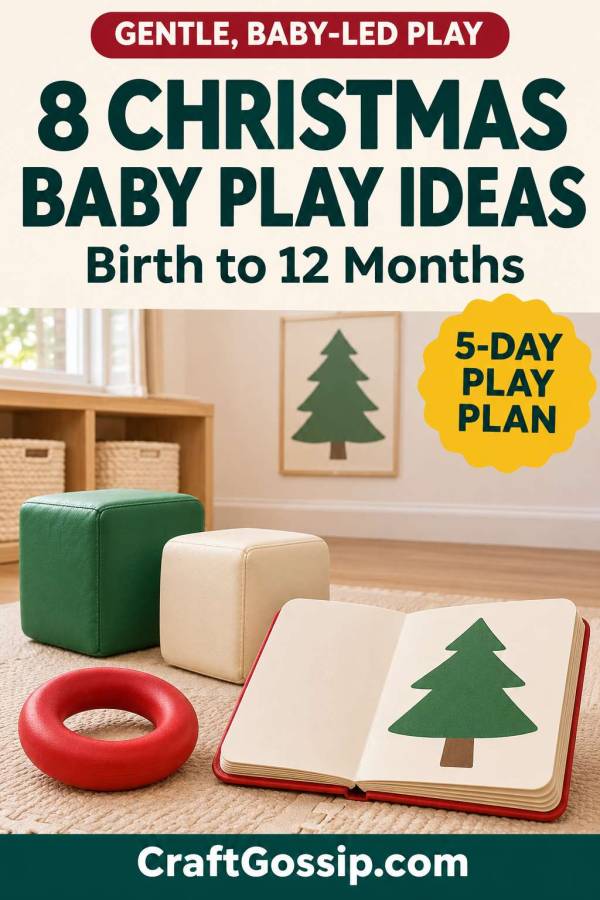
Christmas with a baby doesn’t need to involve elaborate sensory trays or a tiny handprint production line. A familiar song, a simple picture book and a comfortable place to explore can offer much more than a craft that requires the adult to do nearly everything.
These Christmas activities for babies bring a gentle seasonal touch to everyday play. They’re suitable for infant childcare planning or time together at home, with different options across birth to 12 months.
The theme is for the adults organising the week. Babies don’t need to understand Christmas, recognise a tree or complete an activity.
Letting Babies Be Babies Includes Play
It’s understandable to hear “infant lesson plan” and picture someone trying to start school before a baby can sit up.
That isn’t the intention here.
A thoughtful infant plan makes room for looking, listening, reaching, resting and connecting. It helps an adult notice what interests a baby and respond. There are no worksheets, finished products or milestones to tick off.
Gentle conversation offers experience with communication. Handling a suitable toy provides opportunities to explore movement and texture. A responsive adult makes the experience warm and reassuring.
The Raising Children Network guide to baby play explains why interaction and following babies’ interests are central to play.
Before You Begin
Offer activities while babies are awake, comfortable and supervised. Use infant-rated toys and follow their age guidance.
Keep ribbons, tinsel, wrapping scraps, bells, tiny ornaments and decorative lights out of infant play. Christmas decorations are not baby toys.
Use positions the baby can manage comfortably. Never prop a baby into sitting for an activity.
1. Sing a Familiar Christmas Song
Best starting point: Any age.
Sing a short, gentle song while holding the baby comfortably or sitting nearby during floor play. Pause occasionally and watch their response.
A family song or familiar lullaby works equally well. The voice and interaction matter more than seasonal lyrics.
2. Share One Simple Christmas Picture
Best starting point: Any age.
Open a sturdy board book to one clear picture. Talk briefly about it, then wait.
A young baby may look towards your face more than the page. Follow that interest rather than repeatedly redirecting them.
3. Offer a Seasonal-Coloured Grasping Toy
Best starting point: Babies beginning to reach.
Choose an infant-rated red or green grasping toy. Offer it within comfortable reach and allow time to explore.
There’s no colour lesson to complete. The useful opportunity is looking, reaching and handling.
4. Make Tummy Time Social
Best starting point: According to the baby’s readiness and individual guidance.
During closely supervised awake tummy time, get down where the baby can see you. Sing or speak softly.
Stop when they need a break. Tummy time is for awake play; babies should be placed on their backs for sleep in an appropriate clear sleep space.
5. Explore Two Large Soft Blocks
Best starting point: Babies ready to handle objects.
Offer two lightweight, infant-rated blocks. Let the baby turn, touch or bring them together.
Green and cream blocks can give your planning a Christmas feel without adding decorative materials.
6. Try Gentle Peekaboo
Best starting point: Babies interested in social games.
Cover your own face with your hands and reveal it slowly. Keep the greeting gentle and predictable.
Never cover the baby’s face. Continue only while the interaction appears welcome.
7. Put a Toy Into an Open Container
Best starting point: Older infants ready for container exploration.
Use a low, wide, infant-safe container and one large suitable toy. Demonstrate putting it inside, then wait.
Taking it out repeatedly is a worthwhile exploration. You don’t need to insist on posting, sorting or tidying.
8. Repeat a Favourite
Best starting point: Any age.
Offer yesterday’s preferred song, book or toy again.
Repetition belongs in an infant plan. Adults may crave variety sooner than babies do.
A Flexible Five-Day Christmas Play Plan
| Day | Invitation | Adaptation |
|---|---|---|
| Monday | Familiar song | Add pauses for responses |
| Tuesday | Shared board book | Explore one page only |
| Wednesday | Grasping toy | Offer a comfortable reach |
| Thursday | Soft blocks or container play | Choose according to readiness |
| Friday | Repeat a favourite | Follow the baby’s interest |
This is a menu, not a schedule to complete. Feeding, sleep, comfort and individual care come first.
What to Notice
Record what happened: “Amira reached towards the ring and held it briefly” is more helpful than “Amira completed Christmas sensory play.”
A look, movement or sound may be meaningful participation. Turning away or fussing is a reason to pause, simplify or meet another need.
For families planning alongside older siblings, our Christmas art activities for children offer separate ideas. Keep older-child craft materials away from baby’s play space.
Does a baby need Christmas activities?
No. Seasonal play is optional. Familiar everyday interaction is valuable throughout the year.
How long should we play?
Follow the baby’s engagement rather than a timer. A brief enjoyable exchange can be enough.
Christmas play should add a little connection to the day, not another task to finish. Sometimes the loveliest seasonal activity is simply singing the same song together again.





Leave a Reply