• Home
  • Suggest A DIY
  • DIY Newsletter

Lesson Plans

Ideas and resources

  • About CraftGossip
  • Our Network
    • Bath & Body Crafts
    • Candle Making Ideas
    • Crochet Ideas
    • Cross Stitch
    • Edible Crafts
    • Felting Patterns
    • Glass Art
    • Home & Garden Ideas
    • Indie Crafts
    • Jewelry Making
    • Kids Crafts
    • Knitting Patterns
    • Lesson Plans
    • Needlework
    • Party Ideas
    • Polymer Clay
    • Quilting Ideas
    • Recycled Crafts
    • Scrapbooking
    • Sewing Patterns
    • Card Making
    • DIY Weddings
    • Not Craft Ideas
  • Giveaways
  • Roundups
  • Store
  • Search

Book Review: 365 Amazing True Things to Read in Bed

February 6, 2026 by Sarah White Leave a Comment

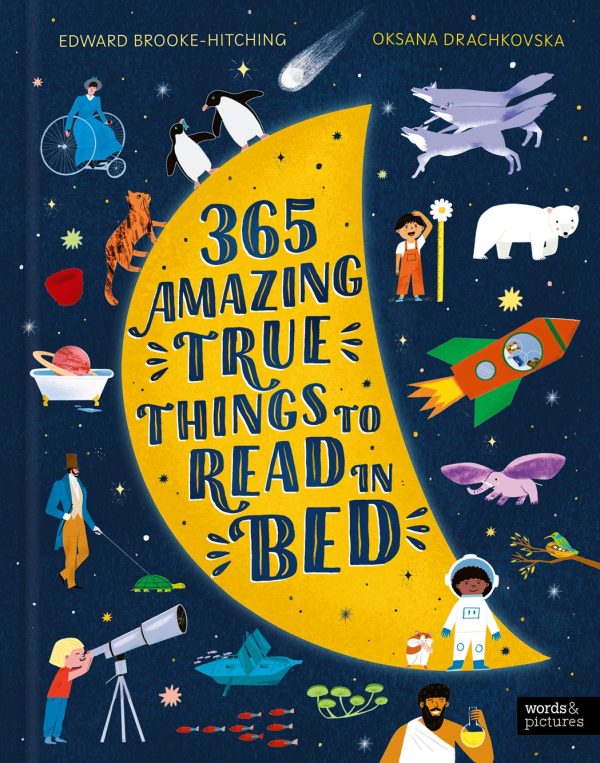
If you have a kiddo who is in the fun facts phase, 365 Amazing True Things to Read in Bed by Edward Brooke-Hitching and illustrated by Oksana Drachkovska would be a fun addition to your collection. 

The book is aimed at readers around 7-9 years old (second to fourth grade) and includes a collection of fast facts about all sorts of things. Each “thing” is one to three sentences long or so, and they cover all sorts of topics, including space, history, the human body, animals and more. 

Readers will learn about planets where it rains diamonds and that at least part of space probably tastes like raspberries. They’ll meet what was thought to be the world’s oldest cat, the emperor who banned pants, and the bird that eats insects off giraffes and sleeps in their armpits. 

There are facts about apples being used in courtship, the island where the last woolly mammoths lived, a beauty pageant for camels and both the biggest and smallest frogs, to name a few entries. 

Several facts are included on each page of the book, and all are illustrated in some way. Often there are several related facts about the same thing, such as an almost full page of panda facts, or a full page on ocean life. Other times the facts aren’t as clearly related but they’re still fun. 

While the title suggests reading these facts before bed, they’d also be fun to share in the classroom. You could read one or a page full every day before lunch or at some other transition time. You can talk about which country has the most islands (Sweden), the oldest known human fossil (its name is Roger, for the person who discovered it) and how African wild dogs vote (with their sneezes!). 

This book is a lot of fun for ids who can’t get enough cool facts, and adults will learn some things, too. 

About the book: 96 pages, hardcover. Published 2025 by words & pictures. Suggested retail price $22.99.
Book Review: Spooky Stories Aloud

Printable Bookmarks for Kids

«
»

Have you read?

Learning about Germany for Kids

Germany is a country in western Europe and is the most populous nation in the European Union. While the country has a difficult history that kids will learn about in school, there’s also a lot of fun stuff to know about Germany, so let’s get started. 

Germany Basics

The capital and largest city is Berlin, and it was divided along with the country after World War II, but Germany has been one nation again since 1990.

The country’s area is 137,847 square miles, or 357,022 square kilometers, and it has a population of more than 83 million people. The official language is German. 

Germany’s government is a parliamentary republic and the have both a president and a chancellor. 

The English word Germany came from the Latin Germania, which is how Julius Caesar referred to the people living there. In German the country is called Deutschland, which comes from a word meaning “of the people” in the proto-Germanic language. 

Ancient humans lived in what we now call Germany at least 600,000 years ago, and the oldest known musical instruments ever found, 42,000 year old flutes, were found in Germany. 

Germany has more than 20,000 castles, including the Neuschwanstein Castle in Bavaria, which was the inspiration for Cinderella’s castle in Disney Land. 

It was the first country to adopt Daylight Saving Time and is also the birthplace of Christmas trees, which began as a tradition in Germany in the 16th century. 

Germany National Symbols

The German flag features three equally sized horizontal stripes in black, red and yellow. This was first used as the flag of the German Confederation in 18498 and was first adopted as the national flag in 1919, again by the Federal Republic in 1949, and again when German reuinified in 1990. 

“Das Lied der Deutschen,” informally known as “Deutschlandlied” has been the national anthem since 1922, but different parts of it have been used at different times. The first stanza was used when the Nazis were in control and the whole song was officially the national anthem after that, though only the third stanza was used. Since reunification only the third verse is the national anthem, and performing the other parts is discouraged. 

The coat of arms features a black eagle with a red beak, claws and tongue on a gold background. It was originally used in medieval times and is the oldest national symbol still in use in Europe and one of the oldest coats of arms in the world. Eagles are also considered a national symbol for this reason. 

The national tree is the oak. 

Brandenburg Gate is considered a national symbol of the reunification of Germany and has a long history. It was built in the late 1700s and was the first Greek Revival structure built in Berlin. It was in the Soviet sector of the city after the war and in an inaccessible exclusion zone after the Berlin Wall was erected. 

Germany Learning Activities for Kids

If you’re getting ready to go back to school you can make a Schultüte or school cone, which is a decorated cone filled with treats to celebrate the return to school. Learn how to make one from The Bear & The Fox. 

Learn about Leipzig Hauptbahnhof, the central railway station in Leipzing, which is the largest railway station in Europe, encompassing 898,400 square feet, or 83,460 square meters. Take a walking tour of the station in this video from Faceless Wanderers.

Germany has a long history of producing beautiful music. Listen to some Bach or Beethoven as you learn more about Germany. 

Learn about the history of book printing and celebrate that Johann Gutenberg printed the first book printed in Europe, a Latin language bible, in Germany in 1450.

A fun fact I know from my daughter’s years in Girl Scouts is that gummy bears were developed in Germany. The first squishy edible bears were made in 1922 by Hans Riegel, who founded Haribo, which still makes the bears to this day. 

Rick Steves has a great tour of Berlin if you want to take a closer look. 

Grab some Germany themed coloring pages and activity sheets from Kindergarten Worksheets and Games, a printable book from 123 Homeschool 4 Me, or some print and color fact sheets from Kids Activities Blog. You can also learn a little German with these coloring worksheets from The Foreign Mom. Or find more country study resources at Teachers Pay Teachers. 

There’s no official national dish of Germany, but most people would point to Sauerbraten, a beef roast cooked with vegetables and wine and served with gravy. Find a recipe at Daring Gourmet, or just buy some sausages for less adventurous kids!

Leave a Reply

Your email address will not be published. Required fields are marked *

Categories

Art Christmas Classroom Craft by Holiday Craft Inspirations DIY Tutorials and Patterns Elementary Games General Homeschool Kids Crafts Lesson Plan Activities & Ideas Math Nature PreSchool Printables Science Craft STEM & STEAM Toddler Tween

RSS More Articles

  • Merrily on High Cross Stitch Pattern Review: A Sweet Retro Christmas Sampler
  • Needle Felted Belted Galloway Cow Tutorial by Sarafina Fiber Art
  • Celebrate National Sewing Month With Connecting Threads’ September Sales
  • Funny Gourd Cross Stitch Patterns
  • 12 Rustic Scrapbooking Layout Ideas
  • New Release: Denim & Daisy Fabric by Lori Holt
  • Book Review: Granny Square Along by Lori Holt
  • Double Knitting Hot Pad Patterns
  • Baby Lock Sewing Machines Labor Day Sale – Save 10%
  • How To Make A Simple Beaded Necklace Without A Clasp

Pick Your Blog

  • Sewing
  • Knitting
  • Quilting
  • Crochet
  • Home & Garden
  • Recycled Crafts
  • Scrapbooking
  • Card Making
  • Polymer Clay
  • Cross-Stitch
  • Edible Crafts
  • Felting
  • Glass Art
  • Indie Crafts
  • Kids Crafts
  • Jewelry Making
  • Lesson Plans
  • Needlework
  • Bath & Body
  • Party Ideas
  • Candle Making
  • DIY Weddings
  • Not Craft
  • Free Craft Projects

Copyright © 2026 · CraftGossip | Start Here | Contact Us | Link to Us | Your Editors | Privacy and affiliate policy