• Home
  • Suggest A DIY
  • DIY Newsletter

Lesson Plans

Ideas and resources

  • About CraftGossip
  • Our Network
    • Bath & Body Crafts
    • Candle Making Ideas
    • Crochet Ideas
    • Cross Stitch
    • Edible Crafts
    • Felting Patterns
    • Glass Art
    • Home & Garden Ideas
    • Indie Crafts
    • Jewelry Making
    • Kids Crafts
    • Knitting Patterns
    • Lesson Plans
    • Needlework
    • Party Ideas
    • Polymer Clay
    • Quilting Ideas
    • Recycled Crafts
    • Scrapbooking
    • Sewing Patterns
    • Card Making
    • DIY Weddings
    • Not Craft Ideas
  • Giveaways
  • Roundups
  • Store
  • Search

Book Review: Wonderful Me

July 11, 2024 by Sarah White Leave a Comment

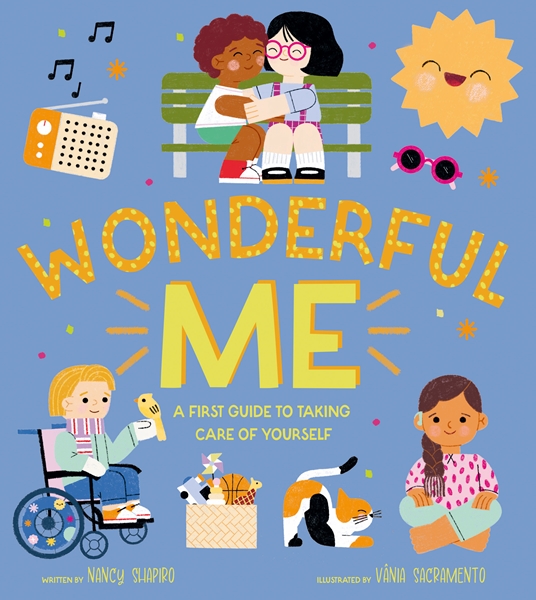
Before talking about anatomy and the changes kids go through in puberty, it’s great to have a base of information on what self-care looks like and what it means to be healthy. Wonderful Me: A First Guide to Taking Care of Yourself by Nancy Shapiro, walks kids through all the ways they can care for themselves and others.

The book generally covers aspects of the body, relationships and feelings, covering things like getting enough sleep, taking care of your body, getting exercise and learning how to check in with your body; being a good friend, establishing boundaries, balancing time alone and with others, asking for and offering help and learning to say no; communicating your feelings and using creative ways to express them and relaxing through balloon breathing.

Each topic is covered on a single page or a two-page spread, so it’s a pretty basic overview of these and other issues, but it’s a good place to start for early elementary school kids who are starting to learn to do things for themselves and express their needs more fluently than they could earlier in life.

The book includes illustrations by Vânia Sacramento showing kids with a range of skin tones and physical differences (there’s a child in a wheelchair and one with a hearing aid) so kids should be able to see themselves in the book and recognize that these are things they should be thinking about and doing in their own lives.

It doesn’t touch on anatomy or gender differences and doesn’t get into anything potentially scary (there are some mentions of talking to adults when things don’t feel right or someone asks you to do something you don’t want to do) and would be a fine book for use in a classroom (with an emphasis on being a good friend and being respectful of yourself and others) or at home if these are things you want to make sure your kids know about and do.

About the book: 48 pages, hardcover, published 2024 by Frances Lincoln Children’s Books, suggested retail price $16.99 
«
»

Have you read?

Learning about Ghana for Kids

Ghana, officially the Republic of Ghana, is a small country in West Africa with a diverse population and ecosystem. It was the first colony in Sub-Saharan Africa to gain independence, in 1957. Let’s learn more about Ghana!

Ghana Basics

Ghana is located on the Gulf of Guinea and the Atlantic Ocean and is also bordered by Ivory Coast, Burkina Faso and Togo. 

It is 92,497 square miles or 239,567 square kilometers in area and has a population of more than 35 million, making it the second-most populous nation in West Africa. The capital and largest city is Accra. 

Akan is the largest ethnic group in the country, but there is no majority ethnic group. Many native languages are recognized by the government, and working languages include English, French, Hindi, Arabic and Ghanaian English as well as Ghanaian Pidgin English. 

More than 70 percent of Ghanaians are Christian.

The name Ghana comes from Wagadu, a West African empire active from the third to twelfth centuries. The word is thought to come from the title of their rulers, which translated to ruler of gold. 

The Portuguese were the original European colonizers in the 15th century, but eventually the British took control, and Ghana struggled for more than a century before gaining independence, after which time the country became active in the Pan-African movement and decolonization efforts throughout the continent. 

The country has a unitary presidential republican form of government, with a president, vice president and Parliament. 

Ghana is crossed by the Prime Meridian and is a few degrees north of the Equator, making it the country closest to the intersection of the Prime Meridian and the Equator (which is in the ocean). The country includes coastal plain, forests, savanna and mangrove ecosystems, and is home to Lake Volta, the third-largest reservoir by volume and the largest by surface area anywhere in the world.  

Ghana National Symbols

The Ghanaian flag consists of three horizontal stripes that are equal in width and are red, yellow and green from top to bottom. The yellow stripe has a five pointed black star in the center. It was adopted in 1957 after independence, and uses the Pan-African colors, which were originally used on the flag of the Ethiopian Empire. 

Red stands for the blood shed in the struggle for independence, while gold is for mineral resources and green for the forests. The black represents the emancipation of Africa against colonialism. 

The national anthem is “God Bless Our Homeland Ghana,” which was also adopted in 1957. The lyrics have been rewritten a few times, and playing of the national anthem is traditionally followed by reciting the en.wikipedia.org/wiki/National_Pledge_Of_Ghana. 

The Black Star of Africa as shown on the flag is also considered a national symbol. It represents the Black Star Line, a railway started by Marcus Garvey as part of the back to Africa movement. It was owned by Black people in contrast to the White Star Line, which was owned by whites. The Black Star is seen as a particular symbol of Ghana and is found on the country’s coat of arms, on Black Star Gate in Black Star Square in Accra and on the seat of state in Parliament, where the president sits.

The coat of arms also features two golden eagles with their wings raised, who are wearing black star medals on red, yellow and green ribbons. The shield between them shows a heraldic lion, a sword and staff, Osu Castle (the presidential palace on the Gulf of Guinea), a cacao tree and a gold mine. The motto “freedom and justice” is written on a ribbon beneath the shield. 

Eagles are also considered a national symbol, as are the African forest elephants. 

Ghana Learning for Kids

Check out this video tour of Accra to see some interesting places in the nation’s capital. It features Black Star Square, also known as Independence Square, which is one of the largest public squares in the world, with seating for 30,000 people. 

Learn more about Osu Castle, which was built by the Danish in 1659 and originally known as Christiansborg, or Christian’s Fortress, after the king of Denmark, Christian IV< who had died in 1648.

Learn more about African elephants and other animals of Ghana. You can also delve into the different ecosystems of the country (for example here’s a good page about mangroves).

I was looking for information about gold mining in Ghana and found this interesting post from NASA about how satellite data can be used to find illegal mining, which is a danger both to the people who do it and the environment.

Multicultural Kids Blog has some fun facts about Ghana, and you can grab more Ghana facts and worksheets from KidsKonnect. Global Explorers Club has a paid unit study about Ghana, and you can find more resources at Teacher Pay Teachers. Also check out this Ghana activity book available on Amazon, and this good list of children’s books about Ghana from Pragmatic Mom. 

There’s no official national dish of Ghana, but frontrunners include fufu and jollof rice. Fufu is traditionally made out of cassava or plantains, which might not be easy to find where you live, but here’s a good recipe from African Bites if you do have access to those ingredients. Jollof rice is made all over West Africa, and it includes chicken or lamb as well as rice, tomatoes, onion, garlic and chilies. This recipe from African Food Map says it is Ghanaian style. 

Leave a Reply

Your email address will not be published. Required fields are marked *

Categories

Art Christmas Classroom Craft by Holiday Craft Inspirations DIY Tutorials and Patterns Elementary Games General Homeschool Kids Crafts Lesson Plan Activities & Ideas Math Nature PreSchool Printables Science Craft STEM & STEAM Toddler Tween

RSS feed: More Articles More Articles

  • Designer Spotlight: Cross Stitch with Art
  • Free Foliage Embroidery Pattern Review
  • Easy Knit Baskets to Use All Your Stash
  • How to Make a Simple Fall Accordion Mini Album
  • Pumpkin Spice Hand Balm for Dry, Overwashed Hands
  • Learning about Ghana for Kids
  • Thrifted Quilt Ghost Decorations for Halloween
  • Garage Door Halloween Decorations
  • 12 FREE Cute Ghost Digital Stamps to Download
  • Stitch Up Tons of Cute Patterns with The Pattern Club

Pick Your Blog

  • Sewing
  • Knitting
  • Quilting
  • Crochet
  • Home & Garden
  • Recycled Crafts
  • Scrapbooking
  • Card Making
  • Polymer Clay
  • Cross-Stitch
  • Edible Crafts
  • Felting
  • Glass Art
  • Indie Crafts
  • Kids Crafts
  • Jewelry Making
  • Lesson Plans
  • Needlework
  • Bath & Body
  • Party Ideas
  • Candle Making
  • DIY Weddings
  • Not Craft
  • Free Craft Projects

Copyright © 2026 · CraftGossip | Start Here | Contact Us | Link to Us | Your Editors | Privacy and affiliate policy