• Home
  • Suggest A DIY
  • DIY Newsletter

Lesson Plans

Ideas and resources

  • About CraftGossip
  • Our Network
    • Bath & Body Crafts
    • Candle Making Ideas
    • Crochet Ideas
    • Cross Stitch
    • Edible Crafts
    • Felting Patterns
    • Glass Art
    • Home & Garden Ideas
    • Indie Crafts
    • Jewelry Making
    • Kids Crafts
    • Knitting Patterns
    • Lesson Plans
    • Needlework
    • Party Ideas
    • Polymer Clay
    • Quilting Ideas
    • Recycled Crafts
    • Scrapbooking
    • Sewing Patterns
    • Card Making
    • DIY Weddings
    • Not Craft Ideas
  • Giveaways
  • Roundups
  • Store
  • Search

How to Set Up Science Centers at Home or in the Classroom

April 25, 2025 by Sarah White Leave a Comment

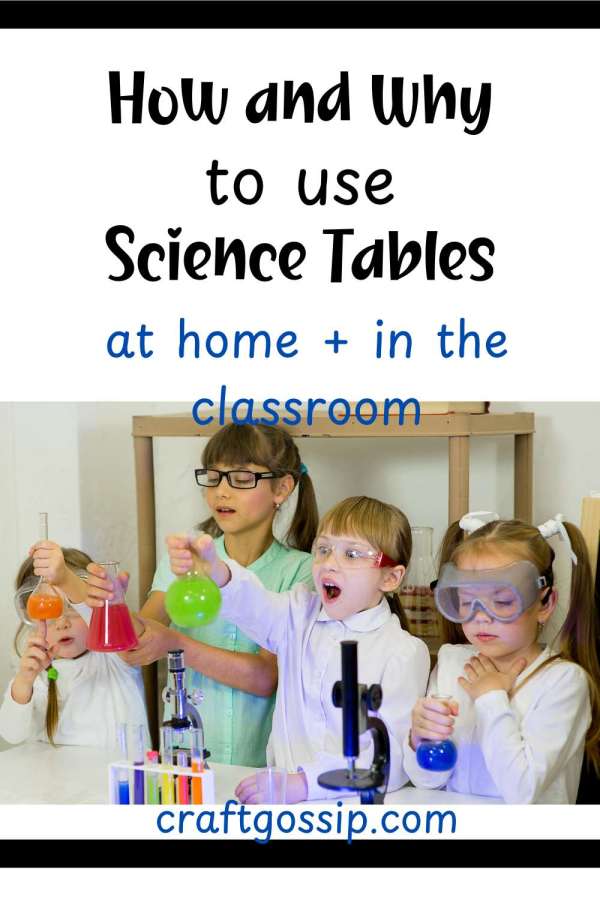
One of my favorite things in the little kid classrooms my daughter was in when she was younger (besides pretend play) was the science center. This space pretty much always had magnifying glasses (and probably binoculars because it was in front of a window), tweezers and other basic tools, but the content of the things they were studying would change every so often.

It might be the table was covered with rocks. Or flowers the kids picked when they were outside. Or fall leaves. Once they had tadpoles harvested from a puddle outside.

Because there’s so much to explore when you’re little, the ideas for science tables are almost endless. It could be about any kind of animal you’re learning about in class, the weather, parts of a plant, space, holiday related activities like weighing and measuring pumpkins, it goes on and on. If you’re doing this at home (or even in a classroom) you can let the interests of the child/children drive what’s on the table and how often it changes.

If you need help with what to put on your science table, or if you’re wondering why having one is a great idea, at home or in the classroom, check out this post from Little Bins for Little Hands.

They happen to have a whole series of printables for science centers that you can buy, but there’s also a free printable of basic science tools in this post, and it’s full of good information on the hows and whys of science tables, even if you don’t buy anything.

The article notes there are all sorts of great things kids learn at science tables in preschool, including a basic understanding of science tools and the scientific method, ways of measuring and classifying things, observation, problem solving, teamwork and more. Lots of these skills have applications outside of science, as they can also help improve vocabulary, critical thinking skills and more.

Check out the post for more great information on science tables and why you might want to set one up today. Have you ever had a science table in the classroom or at home? I’d love to hear about it!
«
»

Have you read?

Books About Bugs Through the Seasons

Growing Up Ladybug and How to Become a Butterfly are both by Stepanka Sekaninova and illustrated by Linh Dao, and they came out at the same time and are on similar themes, so let’s look at them together. 

Growing Up Ladybug is narrated by Mariella, a seven-spot ladybug. She talks about the parts of a ladybug, where they live, different kinds of ladybugs, why humans love them, their defenses against predators and the life cycle of a ladybug. 

The drawings are cute if not always scientifically accurate, it’s not in such a way that’s likely to confuse kids (who probably already know that ladybug mamas don’t push their larval babies around in strollers, for instance. 

It’s a good general description of the life cycle of a lady bug and why we like having them around. 

About the book: 32 pages, hardcover. Published 2026 by Albatross Media. Suggested retail price $16.95.

Similarly, How to Become a Butterfly covers the life cycle of a butterfly, starting with caterpillars eating burning nettle leaves. (Here Amanda is the narrator.) The book talks about a few of the more than 18,000 daytime butterflies in the world as well as other creatures that live in the meadow (there’s that ladybug again, along with crickets, bees and other bugs).

It also covers some of the enemies of caterpillars like wasps and spiders, and the defenses that caterpillars use to try to prevent being eaten. It illustrates how caterpillars grow and change as they molt and prepare to pupate, and what a caterpillar looks like before and while it is forming its chrysalis. And while the book uses the word metamorphasis it doesn’t really talk about what happens between the caterpillar forming a chrysalis and the butterfly hatching. 

This butterfly is a peacock butterfly, and once it hatches the book covers the parts of a butterfly and the life cycle. It also talks about nocturnal moths (though it says nocturnal butterflies are “usually called moths” when moths are actually a different species) and what butterflies do at night. 

I’m maybe a little hard on this book because my daughter is a butterfly expert from way back, but it is still cute and good for the very basic basics of the butterfly life cycle. 

Both books would be fun additions to your bookshelf for younger kids starting to learn about different animals or who have an interest in insects. 

About the book: 32 pages, hardcover. Published 2026 by Albatross Media. Suggested retail price $16.95.

Leave a Reply

Your email address will not be published. Required fields are marked *

Categories

Art Christmas Classroom Craft by Holiday Craft Inspirations DIY Tutorials and Patterns Elementary Games General Homeschool Kids Crafts Lesson Plan Activities & Ideas Math Nature PreSchool Printables Science Craft STEM & STEAM Toddler Tween

RSS More Articles

  • Backpack Cross Stitch Patterns
  • Pencil Knitting Patterns
  • 15 Cardboard Crafts For Adults: Clever Ways To Use Boxes, Tubes And Packaging
  • Red Melt The Ice Slouch Beanie Crochet Pattern Review
  • These Bakery-Style Biscoff Cupcakes Disappear in Minutes
  • 15 Lush Dupe Recipes You Can Make At Home
  • Sewing for Seniors: A Roundup of Practical Patterns for Aged Care and Dementia
  • Honey Baby Bear Applique Machine Embroidery Design – Etsy Review
  • 80’s Inspired Boombox Shaped Mini Album
  • Free Baby Star Crochet Pattern: A Cosy Hooded Cocoon for Newborns

Pick Your Blog

  • Sewing
  • Knitting
  • Quilting
  • Crochet
  • Home & Garden
  • Recycled Crafts
  • Scrapbooking
  • Card Making
  • Polymer Clay
  • Cross-Stitch
  • Edible Crafts
  • Felting
  • Glass Art
  • Indie Crafts
  • Kids Crafts
  • Jewelry Making
  • Lesson Plans
  • Needlework
  • Bath & Body
  • Party Ideas
  • Candle Making
  • DIY Weddings
  • Not Craft
  • Free Craft Projects

Copyright © 2026 · CraftGossip | Start Here | Contact Us | Link to Us | Your Editors | Privacy and affiliate policy