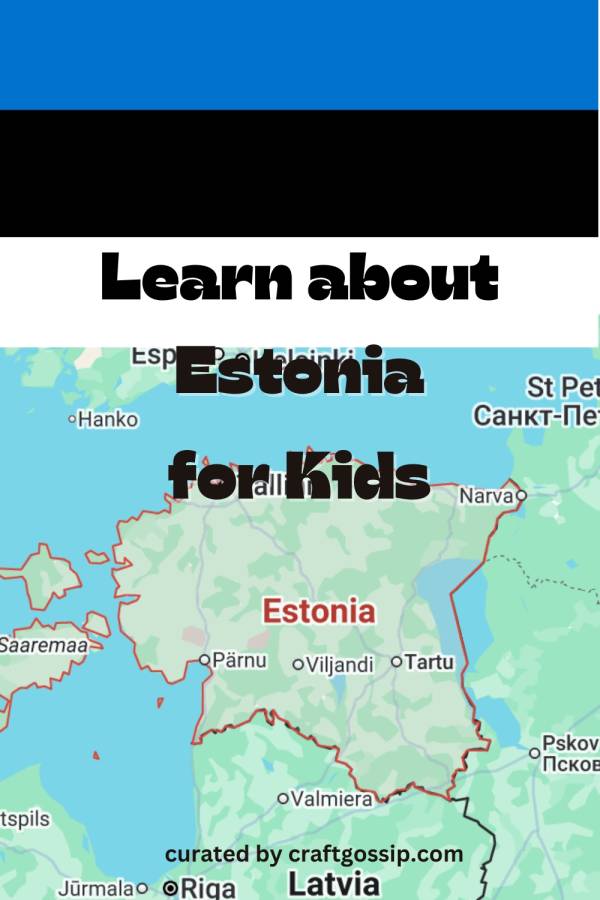
Estonia, officially the Republic of Estonia is a Baltic nation in Northern Europe that is bordered by Latvia and Russia, as well as the Baltic Sea and the Gulf of Finland.
Estonia Basics
Estonia is comprised of the mainland, two large islands and many smaller islands and islets in the Baltic Sea.
The land is 17,504 square miles, or 45,335 square kilometers, and is home to about 1.3 million people.
The capital and largest city is Tallinn, which is on a bay in the north of the country.
About 68 percent of people in Estonia are ethnically Estonians, and about 21 percent are Russian. The majority of people don’t practice a religion.
People have lived in current-day Estonia for at least 11,000 years. Coastal Estonians developed a Viking-like lifestyle and in the seventh century the “Estonia Vikings” were responsible for killing the king of the Swedes.
Along with Latvia, Estonia became part of a Christian territory known as Terra Mariana or Livonia in the 13th century, and the capital received town rights in 1248. The area was ruled by Russia, Poland and Sweden at various times and was fully conquered by Russia in 1710.
While it declared independence from Russia in 1918, it was under German and Russian occupation from 1940 to 1991 and finally achieved independence again with the fall of the Soviet Union in 1991.
The name Estonia is Eesti in Estonian, which is linked to the Aesti, people who lived in the region in the early AD period. There are both Scandinavian and Viking references calling the region Eistland.
Estonia has a unitary parliamentary republic with a president, prime minister and legislature. It is considered one of the least corrupt nations, and telecommunications, energy, textiles and chemical production are among its chief industries.
Estonia National Symbols
The Estonia flag features three horizontal bands, from top to bottom in blue, black and white. In Estonian, it’s known as the sinimustvalge, which means blue, black, white. It first became the national flag in 1918 and was used throughout its history, including by the government in exile when it was outlawed by the Soviet Union. It was officially re-affirmed as the national flag in 1990, a year before independence.
“Mu isamaa, mu õnn ja rõõm,” or “My Fatherland, My Happiness and Joy” is the national anthem. It was originally adopted in 1920 and reinstated in 1990. The song was first presented in 1869 and became a symbol of the Estonian people’s desires for independence.
The coat of arms of Estonia features a gold shield and oak leaf branches, with three blue lions on the shield. It’s based on the coat of arms of Denmark from the 13th century, when parts of what is now Estonia were part of Denmark.
The blue cornflower is the national flower, which has grown in the area for 10,000 years and is commonly seen growing in rye fields. The barn swallow is the national bird, and the wolf is the national animal. Baltic herring are the national fish.
Learning about Estonia for Kids
Take a virtual walking tour of Tallin with this tour from City Walks Virtual Tours.
Learn about Soomaa National Park, a wetland in southwest Estonia known for its “fifth season,” which water from the melting snow floods much of the land, making it easier to navigate by boat than any other way.
Check out Kõpu lighthouse, which is more than 500 years old, making it one of the oldest continuously operated lighthouses in the world. It’s also the tallest lighthouse in the Baltic Sea region.
Look at this cool lake made by a meteor crater! Kalli meteorite fell around 7500 years ago on the island of Saaremaa. It features a stone wall and because the bones of many animals have been found there, is considered to have been a sacrificial site.
Learn more Estonia facts from Kiddle, or get printable fact sheets and other worksheets from KidsKonnect. You can also find learning activities about Estonia at Teachers Pay Teachers.
Mulgipuder (sometimes two words, Mulgi puder) is made with potatoes and barley and sometimes pork, and is considered a national dish of Estonia. Find a super simple recipe at Estonian Culture.
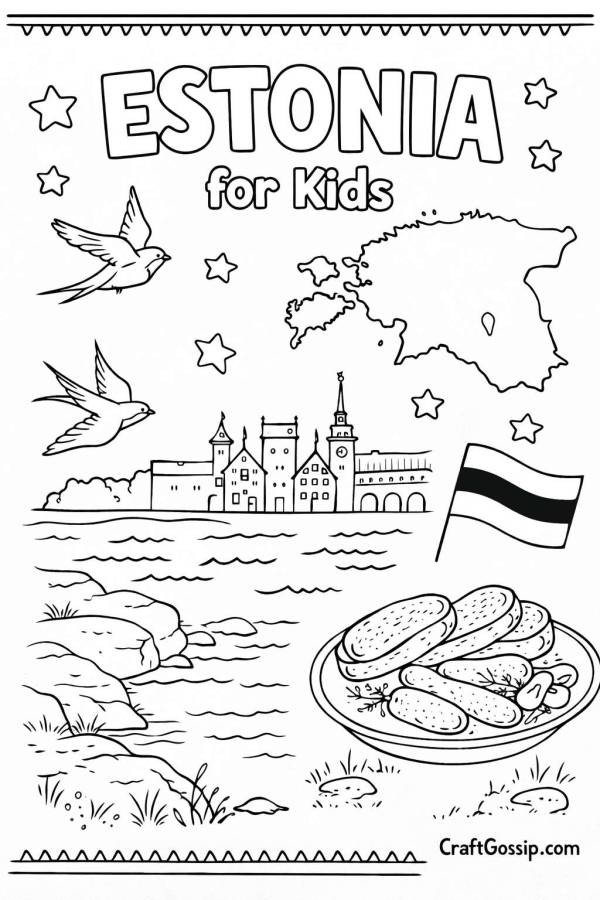
Right click and save to download this coloring sheet.
Leave a Reply