 I love sharing ways to make learning more fun, and when we can make learning things that kids have to learn a little more interesting, that’s always a good thing.
Multiplication is a vital math basic, but just memorizing multiplication tables isn’t that much fun, and some kids are just bad at it (confession: I never learned mine because my teachers emphasized memorization and I just couldn’t do it).
Math games and projects like these might make it easier for some kids to learn, and more fun for everyone.
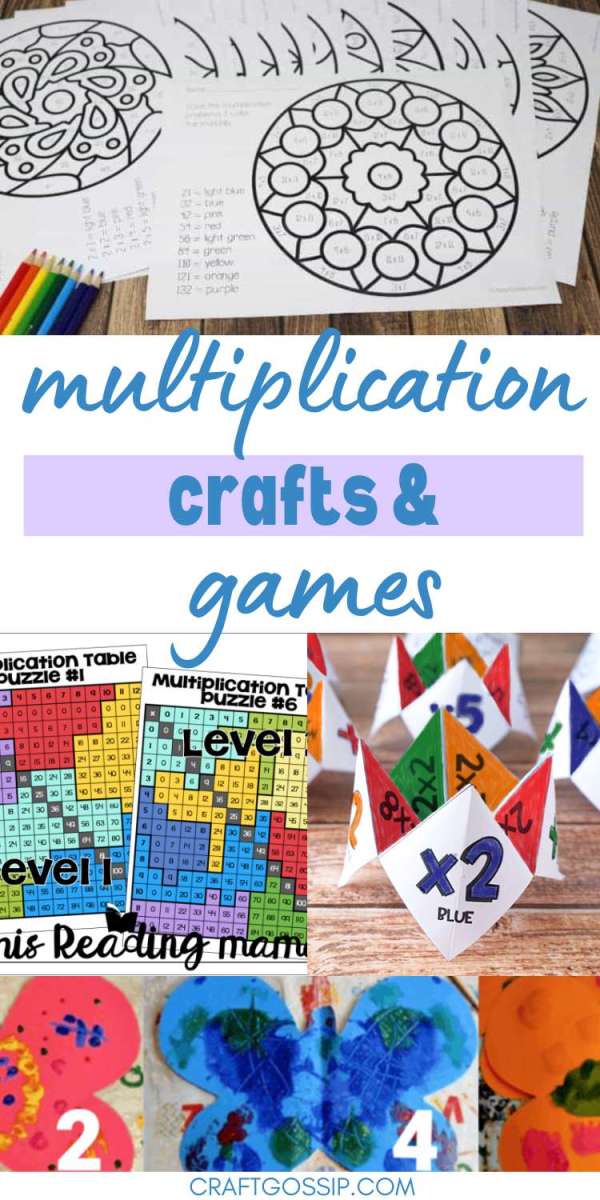
Skip counting is a fundamental skill that comes before learning multiplication, and you can practice counting by twos while making art with this activity from Nurture Store. This is a classic butterfly symmetry painting project with a counting twist, but I think you could make it even more of a counting project by representing the numbers on the butterflies themselves. Use two colors on the butterfly that will be 2, for example, or four different shapes for 4 or six spots for 6, etc.
This Reading Mama has a collection of six multiplication table puzzles on two different levels (level two has more pieces). Kids can cut out the puzzle pieces and put them together to make a multiplication table.
Rock Your Homeschool has a great set of printables using multiplication to make color by number mandalas. Each color is indicated by a multiplication problem (like 2×2 is blue) while the sections to color are numbered with the answers (or vice versa). There are pages for each set of math facts from multiples of 2 to 12, as well as a mixed page. These are not free but they are really cute and would be great for a classroom!
Kids of a certain age in mid-elementary school seem to go through a cootie catcher phase, so combine that with learning math facts with these printable multiplication cootie catchers from Artsy Fartsy Mama. These include math facts for multiples of 2 through 9, and as kids choose colors as they play they’ll get a multiplication problem to answer.
Free Printable – Math Calculator Game
Teachers Love This Version Of Monopoly – See Why
Leave a Reply