I remember wondering this from time to time myself. Not just on glue sticks though. In fact I think the 4 boxes of tissues we had to take in were my breaking point.
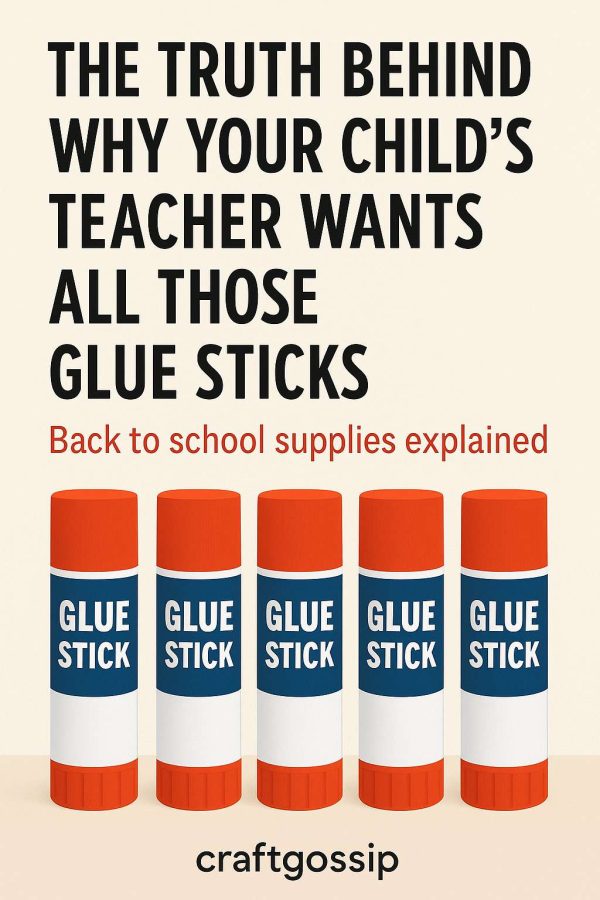
f you’ve ever stared at your child’s back-to-school supply list and muttered, “Seriously, twelve glue sticks? What are they doing, eating them?”—you are not alone. Every parent has had that moment of disbelief, wondering if teachers are hoarding an underground glue empire. But the truth behind those glue stick requests is far less mysterious (and much more practical).
Let’s pull back the curtain and talk honestly about why your child’s teacher needs all those glue sticks—and why they really do make a difference in the classroom.
The following years I have sent in a few extras so that the game can continue and snot can still be wiped from the faces of children. So why do they need all those Glue sticks? Check out the article here.
Glue Sticks Don’t Last Long in Little Hands
Unlike a bottle of liquid glue that can last a whole term, glue sticks dry out, roll under desks, or end up with the cap missing by day two. Kids don’t mean to waste them, but between craft projects, interactive notebooks, and daily worksheets, a glue stick’s life expectancy is short. Teachers ask for multiples because one stick per child just won’t cut it.
Every Child Deserves Access to Supplies
Imagine being the child who can’t complete a project because their glue has run out and no one has a spare. Teachers know that shared supplies help level the playing field. Having extras ensures that no child feels left out or falls behind simply because of a missing glue stick.
Classroom Projects Require LOTS of Glue
It’s easy to underestimate just how often kids are gluing. From building dioramas and making anchor charts to cutting-and-pasting math problems, glue sticks are part of daily learning. Multiply that by 25–30 students, and suddenly, a dozen sticks per child doesn’t sound so crazy.
Teachers Are Stretching Tight Budgets
Let’s be real—teachers already spend hundreds of dollars of their own money on classroom supplies. By asking parents to pitch in with glue sticks (and pencils, tissues, markers, you name it), it helps reduce that burden. Extra supplies mean teachers can focus on teaching instead of scrambling to fund basic materials.
Tips for Parents: Smarter Back-to-School Shopping
- Buy in bulk when you can. Warehouse clubs and back-to-school sales often have big packs for less.
- Label your child’s supplies. A name on each glue stick means fewer get lost in the shuffle.
- Consider donating extras mid-year. Supplies run out quickly—teachers will love you if you send a refill pack in January.
- Choose disappearing purple glue sticks. Teachers love these because kids can actually see where the glue goes (and less ends up on clothes and hair!).
The next time you’re tossing yet another pack of glue sticks into your trolley, remember—it’s not just about sticky crafts. It’s about giving every child the tools they need to succeed and supporting teachers who are juggling a classroom full of eager (and sometimes messy) learners.
So yes, your child’s teacher really does need all those glue sticks—and probably a little chocolate and coffee to go with them.
But then last year my daughter told me how they had this tissue game as to how many you could scrunch up (and inevitably waste) in one hand. At the point I realized why I was sending in 4 boxes.
Here are some more things that you can contribute to your child’s classroom. Your teacher is likely to be paying for these items themselves.





Leave a Reply