• Home
  • Suggest A DIY
  • DIY Newsletter

Lesson Plans

Ideas and resources

  • About CraftGossip
  • Our Network
    • Bath & Body Crafts
    • Candle Making Ideas
    • Crochet Ideas
    • Cross Stitch
    • Edible Crafts
    • Felting Patterns
    • Glass Art
    • Home & Garden Ideas
    • Indie Crafts
    • Jewelry Making
    • Kids Crafts
    • Knitting Patterns
    • Lesson Plans
    • Needlework
    • Party Ideas
    • Polymer Clay
    • Quilting Ideas
    • Recycled Crafts
    • Scrapbooking
    • Sewing Patterns
    • Card Making
    • DIY Weddings
    • Not Craft Ideas
  • Giveaways
  • Roundups
  • Store
  • Search

Turkey Learning Activities

November 3, 2025 by Sarah White Leave a Comment

With Thanksgiving right around the corner as I write this, it seems like a goof time to incorporate some turkey-themed learning into your classroom, homeschool or after school activities. Check out these fun learning activities all about turkey!

First let’s talk about real turkeys. Learn about and label the parts of a turkey with this printable worksheet from Living Life and Learning, and check out other turkey worksheets they have available.

Talk about the life cycle of a turkey with this worksheet pack from 123 Homeschool 4 Me. This one is a whopping 74 pages and includes life cycle, science terms and vocabulary, math and literacy activities all with a turkey theme. And it’s free!

The Stay at Home Teacher has three cute turkey activities, including scissor practice, color by code and a shapes roll and play game. These are great for little learners because there’s no reading involved. 

Add a fine motor activity with a turkey twist to learning to count with this idea from Pre-K Pages. It’s pretty easy to set up and involves counting and stringing beads, so you’re learning and working the fingers at the same time! (There’s a printable for the turkey on their page if you need it.)

Turner Tots has several turkey and Thanksgiving themed math activities (check the post for ideas and the printables are available at Teachers Pay Teachers). I love this stuff the turkey one, which uses different colored pompoms to practice counting. 

And of course there are a lot of STEM activities that you can change up to have a turkey theme. MomBrite did a STEM challenge to build a cage out of toothpicks and marshmallows to keep the turkeys safe. Friends Art Lab has a fun and colorful fizzy turkey science activity. Or make a melting turkey with this idea from 123 Homeschool 4 Me. You can even do an egg drop with a turkey twist with this tutorial from STEAMsational. So fun!

Also make sure to check out my roundup of ideas for disguising a turkey, which is always a fun Thanksgiving activity for kids.
«
»

Have you read?

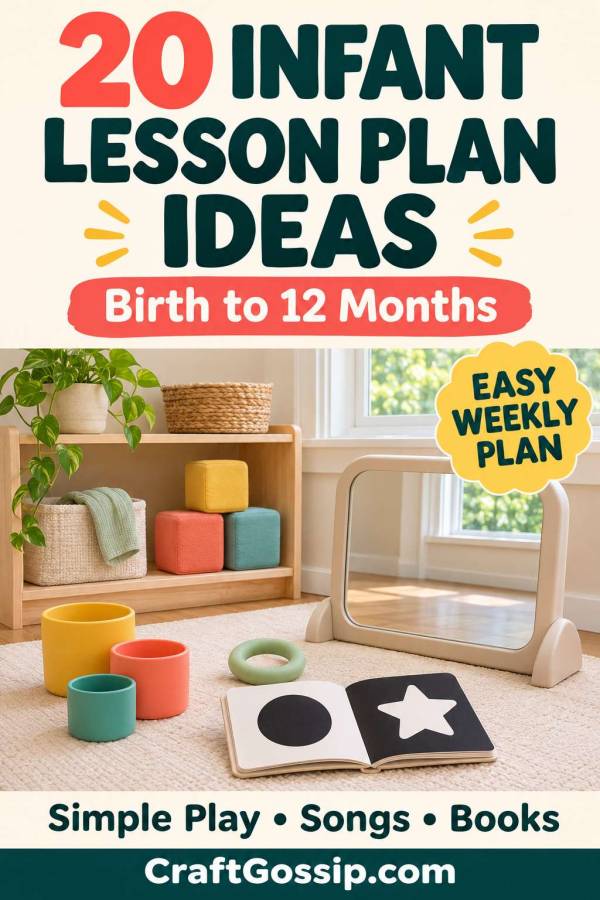
20 Infant Lesson Plan Ideas for Birth to 12 Months

Planning activities for babies can feel surprisingly complicated. Search for infant learning ideas and you’ll find everything from elaborate sensory setups to themed crafts that seem to require considerably more participation from the adult than the baby.

I love a creative project, but babies don’t need a finished masterpiece to have a meaningful learning experience. Looking at your face, exploring an age-appropriate toy, hearing a familiar song and discovering that something happens when they move are all worthwhile starting points.

These infant lesson plan ideas are designed for childcare educators, family daycare providers and parents looking for simple, responsive play experiences. You’ll find 20 activities, guidance for different stages within the first year, a sample weekly plan and an observation template you can copy.

The most useful plan leaves room for the baby in front of you. Sleep, feeding, comfort and connection come first. If your carefully planned activity becomes a cuddle and a quiet song, you haven’t wasted the session.

What Does an Infant Lesson Plan Look Like?

An infant lesson plan is a flexible guide to everyday interactions and play. It identifies what you’ll offer, how you’ll respond and what you might notice.

It doesn’t need worksheets, group instruction or a new theme every day.

A practical plan includes:

  • An opportunity: Explore reaching for a toy.
  • Materials: One clean, age-appropriate grasping toy.
  • Adult interaction: Offer it within comfortable reach and wait.
  • An adaptation: Change the position or simplify the experience.
  • An observation: Record what the baby actually did.
  • A next step: Repeat, adjust or offer something different.

Responsive care belongs inside the plan. Talking during a nappy change, responding to a sound and sharing a book are learning experiences too.

ZERO TO THREE’s guidance on learning through play offers examples of how simple back-and-forth interactions, songs and ball play create opportunities for learning.

Choose Activities by Readiness, Not Just Age

The age ranges below are starting points, not deadlines. Babies develop differently, and one child may enjoy activities from several rows.

Approximate agePossible interestsSuitable planning focus
Birth–3 monthsFamiliar voices, faces and simple visual patternsConnection, gentle conversation and brief awake floor play
3–6 monthsLooking, reaching and exploring graspable toysMovement, touch and responding to sounds
6–9 monthsHandling objects, supported or independent sitting and social gamesExploration, cause and effect and back-and-forth interaction
9–12 monthsPutting objects in containers, gestures and moving aroundProblem-solving, communication and self-directed exploration

Choose positions the baby can manage comfortably. Don’t prop a baby into sitting to complete an activity or move their limbs to make them perform a skill.

For babies born prematurely or receiving developmental support, plan with families and follow individual professional guidance.

Set Up Infant Activities Safely

Before introducing materials, check that they are suitable for the baby’s age and intended use.

Choose sturdy, washable infant toys without loose components, sharp edges, cords or accessible batteries. Inspect them regularly and remove damaged items. Follow your childcare service’s cleaning and supervision procedures.

Skip loose rice, dried beans, pom-poms, water beads, balloons, button collections and homemade containers filled with small objects. A glued lid doesn’t make a recycled container an infant-safe toy.

The American Academy of Pediatrics’ toy safety guide explains why age labels, secure construction and avoiding small parts matter.

All activities below are for awake, supervised play. Tummy time is an awake activity with close supervision; babies should be placed on their backs for sleep in an appropriate clear sleep space. See the AAP’s tummy time and safe sleep guidance.

Infant Lesson Plan Ideas for Birth to 3 Months

1. Have a Face-to-Face Conversation

Focus: Connection and early communication
Materials: None

Hold the baby comfortably with their head supported, or sit close during safe floor play. Speak softly, pause and give them time to respond.

A response might be a change in expression, a movement or a sound. You don’t need to keep up a running commentary.

Notice: What happens when you pause? Does the baby look towards you or make a sound?

2. Share One High-Contrast Picture

Focus: Looking and visual attention
Materials: An infant-appropriate high-contrast book

Show one simple page within comfortable viewing distance. Hold it still before moving it slowly a short distance.

Offer one picture at a time rather than surrounding the baby with cards.

Notice: Which image holds their interest? Do they briefly follow its movement?

3. Sing a Familiar Welcome Song

Focus: Listening and a predictable interaction
Materials: None

Sing a short song using the baby’s name. Keep the melody gentle and repeat it during familiar moments.

Ask families whether there is a song or home-language greeting they would like included.

Notice: Does the baby become still, move, look towards you or vocalise?

4. Make Tummy Time Social

Focus: Awake movement and interaction
Materials: A suitable firm floor-play surface

During a brief, closely supervised tummy-time opportunity, get down where the baby can see your face. Speak gently or offer a familiar song.

Follow their tolerance and individual guidance. Stop when they need a break rather than trying to finish a timed lesson.

Notice: How do they respond to your voice and position?

5. Talk Through Everyday Care

Focus: Language and familiarity
Materials: Normal care supplies

During dressing or nappy changing, use simple phrases such as “Here comes your clean sleeve” or “I’m picking you up now.”

Pause before actions when practical and respond to the baby’s cues. Care should feel like an interaction, not something happening around them.

Notice: Are there familiar words, voices or moments they seem to respond to?

Infant Lesson Plan Ideas for 3 to 6 Months

6. Offer a Comfortable Reach

Focus: Reaching and grasping
Materials: An age-appropriate grasping toy

Offer the toy where the baby can see it and comfortably attempt to reach. Allow plenty of time.

If the position is frustrating, bring the toy closer. The aim is an inviting opportunity, not an obstacle course.

Notice: Do they watch, swipe, touch or hold?

7. Explore Two Toy Textures

Focus: Touch and exploration
Materials: Two infant toys with different safe surfaces

Offer one toy, then another, allowing the baby to explore each at their pace.

Describe what they encounter with a few words, such as “smooth ring” or “bumpy toy.” Follow the product’s age guidance, including suitability for mouthing.

Notice: How do they explore each object?

8. Copy a Baby’s Sound

Focus: Back-and-forth communication
Materials: None

When the baby makes a comfortable coo or other sound, respond with a similar sound. Then wait.

If they don’t answer, that’s fine. Keep the interaction relaxed.

Notice: Does the exchange continue through sounds, expressions or movement?

9. Enjoy a Baby-Safe Mirror

Focus: Looking and social interaction
Materials: A securely positioned, shatter-resistant infant mirror

Place the mirror according to its instructions during supervised floor play. Stay close and talk about what the baby appears interested in.

There’s no need to test whether they recognise themselves.

Notice: Do they look between you and the reflection, smile or reach?

10. Listen to a Gentle Rattle

Focus: Sound and cause-and-effect exploration
Materials: A purpose-made infant rattle

Make a gentle sound where the baby can see the toy. Pause, then offer it if they are ready to grasp it.

Keep sound levels comfortable and away from their ears.

Notice: Do they look towards the sound or move the rattle themselves?

Infant Lesson Plan Ideas for 6 to 9 Months

11. Explore an Easy-Grasp Ball

Focus: Handling objects and movement
Materials: An infant-safe ball

Offer the ball during a position the baby can manage comfortably. Let them touch, turn and explore it.

For babies already moving around the floor, roll it a short distance and allow them to decide whether to follow.

Notice: Do they turn it, transfer it or move towards it?

12. Play Peekaboo With Your Hands

Focus: Social anticipation
Materials: None

Cover your own face with your hands, then reveal it with a gentle greeting.

Keep the reveal predictable and avoid sudden loud noises. Don’t place fabric over the baby’s face.

Notice: Do they watch, smile, vocalise or try to continue the game?

13. Share a Short Board Book

Focus: Language and shared attention
Materials: A sturdy board book

Look at a few pages together. Name an object, make a simple sound and pause.

You don’t have to read every word or finish the book. Some days, one particularly interesting page is quite enough.

Notice: Which pictures attract attention? Does the baby touch the page or look towards you?

14. Offer Two Suitable Toys

Focus: Interest and choice
Materials: Two clean infant toys

Present the toys within view without crowding the baby. Wait to see whether they look towards, reach for or otherwise show interest in one.

Respond to that interest rather than repeatedly moving both toys to attract attention.

Notice: What signals helped you understand their preference?

15. Repeat a Simple Action Song

Focus: Listening and participation
Materials: None

Sing a familiar rhyme while modelling gentle hand actions yourself.

Let the baby watch, vocalise or move in their own way. Avoid moving their hands through the actions to produce a finished performance.

Notice: Do they anticipate a pause or respond to a familiar part?

Infant Lesson Plan Ideas for 9 to 12 Months

16. Put Large Toys In and Out

Focus: Exploration and problem-solving
Materials: A low, wide, stable container and large infant-safe toys

Demonstrate placing one toy inside the container. Leave time for the baby to explore taking it out or adding another.

Choose a container without a lid, sharp edges or openings that could trap fingers.

Notice: What do they repeat?

17. Find a Partly Hidden Toy

Focus: Searching and persistence
Materials: A large infant toy and an opaque, open-sided play screen

Partly conceal a toy behind a stable, baby-safe screen while leaving some visible. Allow the baby to look or reach around it.

Use an arrangement without moving flaps or pinch points.

Notice: Do they look around the barrier or reach towards the visible part?

18. Knock Down a Small Block Tower

Focus: Cause and effect
Materials: Large, lightweight blocks rated for infants

Build a low tower within comfortable reach. Let the baby touch or knock it over, then offer to repeat.

There’s no requirement to stack independently. Watching, reaching and changing what happens are worthwhile parts of the experience.

Notice: Do they repeat an action after the blocks fall?

19. Pair Words With Everyday Gestures

Focus: Communication
Materials: None

Wave while saying goodbye or open your arms when offering a cuddle.

Model meaningful gestures during real interactions. Respond to the baby’s own communication without requiring them to copy you before receiving care or comfort.

Notice: How do they request attention, continue an interaction or show they’ve finished?

20. Explore Nesting Cups

Focus: Handling, comparison and discovery
Materials: Large infant-rated nesting cups

Offer two or three cups on the floor. Let the baby turn them, separate them, tap them together or try placing one inside another.

Describe what they are doing rather than correcting how the toy should be used.

Notice: Which action interests them enough to repeat?

A Sample Weekly Infant Lesson Plan for Childcare

This is a menu of opportunities, not a timetable for the whole room. Offer activities individually when babies are awake, comfortable and interested.

Keep talking, singing, books and responsive care available throughout the week.

DayMain invitationYounger-infant adaptationOlder-infant adaptationObservation prompt
MondayFamiliar faces and voicesFace-to-face conversationPeekaboo with handsHow did the baby invite or continue interaction?
TuesdayLook and reachOne high-contrast book pageOffer a grasping toy or ballWhat attracted attention?
WednesdaySound and pauseGentle welcome songRattle exploration or action songWhat happened during a pause?
ThursdayExplore objectsOne suitable textured toyIn-and-out container playWhich action was repeated?
FridayRevisit a favouriteRepeat a preferred interactionRepeat and gently adapt a favourite activityWhat should stay in next week’s plan?

Repetition is part of the plan. If a baby is absorbed in putting a cup inside another cup, you don’t need to interrupt with a completely new experience because the calendar says Friday.

How Long Should Infant Activities Last?

There is no single lesson length that suits every baby or every experience.

A young infant may enjoy a brief exchange before needing quiet. An older infant may repeatedly explore the same object for longer. Follow engagement rather than requiring a set number of minutes.

Looking away, fussing, closing their eyes or turning away can indicate a need to pause or reduce stimulation. Respond to the whole situation, including hunger, tiredness and comfort.

ZERO TO THREE’s guide to playing with babies and toddlers explains how following a child’s lead and reading their signals can shape play.

Copy-and-Paste Infant Planning Template

Baby’s name:

Week beginning:

Current interests and family input:

Opportunity to explore:

Materials and safety checks:

What the educator will do:

Adaptation for the baby’s current abilities:

How the baby communicated interest or a need to stop:

What I observed:

What I will repeat or change:

For example:

Opportunity: Explore taking a large toy out of a container.

Observation: “Ari reached into the low tub, removed the ball and dropped it beside the tub three times.”

Next step: “Offer the same setup again. Model putting the ball back once, then wait.”

That note is more useful than “Ari enjoyed sensory play” because it tells the next educator what actually happened.

Observation is for understanding and planning, not grading babies. Discuss developmental concerns with families and follow your service’s referral procedures.

Easy Infant Themes That Don’t Need Elaborate Supplies

If your setting uses themes, keep them broad enough to follow babies’ interests.

ThemeSimple experiences
Familiar voicesFamily songs, greetings and gentle conversations
Faces and feelingsMirror interaction, peekaboo and responsive expressions
Things that moveRolling balls, reaching and floor exploration
Sounds and silenceRattles, songs and waiting for a response
In and outLarge toys and open containers
Favourite booksRepeated pictures, familiar words and shared attention

Babies don’t need to learn colour names, letters or seasonal facts to benefit from these experiences.

For families planning activities across several ages, our music games for children provides ideas for older siblings. Keep infant music experiences focused on live singing, comfortable sound levels and simple interaction.

What Supplies Do You Need?

Start with a small collection of sturdy board books, infant-rated grasping toys, a baby-safe mirror, large lightweight blocks, nesting cups and a suitable floor-play area.

Check manufacturer age recommendations, care instructions and recalls before introducing products.

I’d spend on a few durable, washable materials before buying a themed activity kit for every week. Your voice, attention and willingness to repeat the same little game are doing a great deal of the work.

Frequently Asked Questions About Infant Lesson Plans

What are good infant lesson plan ideas?

Gentle conversations, shared books, songs, supervised awake tummy time and suitable toy exploration are useful starting points. Choose experiences that match the baby’s interests and current abilities.

Do infants need a different activity every day?

No. Repeat familiar experiences and adjust them in response to what you observe. A weekly plan can include the same favourite book or song several times.

What should an infant lesson plan include?

Include the opportunity, suitable materials, adult interaction, individual adaptations, safety checks and a short observation. Make room for family input and changes to the baby’s routine.

Can I use toddler sensory activities with infants?

Don’t assume a toddler activity is suitable for a baby. Loose fillers, small craft materials and homemade sensory containers can introduce hazards. Choose materials intended for infants and follow your service’s procedures.

Are infant crafts necessary?

No. Babies can explore and learn without producing artwork. A keepsake might be meaningful to adults, but the baby’s comfort, participation and experience should guide the activity.

A useful infant plan gives you something thoughtful to offer and permission to adapt it. Some days that will be exploring a ball. Some days it will be hearing a favourite song again. Both can belong in a well-planned week.

Leave a Reply

Your email address will not be published. Required fields are marked *

Categories

Art Activities Christmas Classroom Craft by Holiday Craft Inspirations DIY Tutorials and Patterns Elementary Games Homeschool Kids Crafts Lesson Plan Activities & Ideas Math More Crafts Nature Preschool Printables Science Craft STEM & STEAM Toddler Tween

RSS feed: More Articles More Articles

  • Free Felting Tutorial Friday: Wet Felted Wool Cookie Cutter Ornaments
  • Free Poinsettia Embroidery Design Review
  • DIY Terracotta Pot Miniature Pond: A Mossy Little Water Garden for Your Patio
  • 20 November Lesson Plan Ideas for Preschool and Elementary
  • Book Review: Stitches from the Yuletide by Kathy Schmitz
  • Thanksgiving Scrapbook Layouts That Tell the Story Around the Table
  • How To Make Christmas Resin Jewelry: Easy Handmade Pendants, Earrings And Gift Ideas
  • Christmas Bookstore Cross Stitch Design Review: A Cosy Find for Book Lovers
  • 10 Knitted Christmas Bauble Patterns for a Tree Full of Handmade Charm
  • The Official Stardew Valley Crochet Book: That Rooster Had Me Hooked

Pick Your Blog

  • Sewing
  • Knitting
  • Quilting
  • Crochet
  • Home & Garden
  • Recycled Crafts
  • Scrapbooking
  • Card Making
  • Polymer Clay
  • Cross-Stitch
  • Edible Crafts
  • Felting
  • Glass Art
  • Indie Crafts
  • Kids Crafts
  • Jewelry Making
  • Lesson Plans
  • Needlework
  • Bath & Body
  • Party Ideas
  • Candle Making
  • DIY Weddings
  • Not Craft
  • Free Craft Projects

Copyright © 2026 · CraftGossip | Start Here | Contact Us | Link to Us | Your Editors | Privacy and affiliate policy