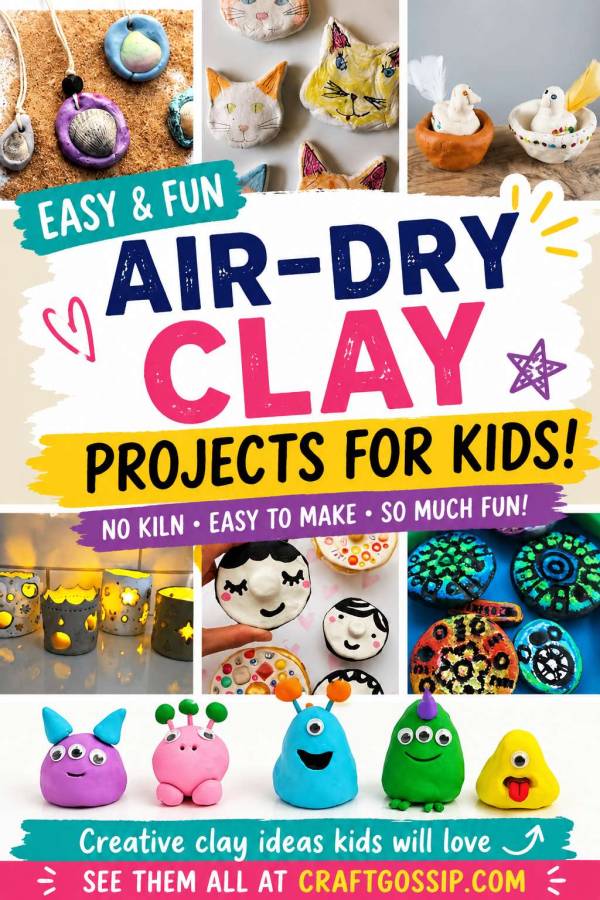
Every now and then I feel the need to delve into what some people might consider a kids’ craft for my mental well-being. Lately it has been air dry clay. It’s easy to make your own air dry clay or you can buy it and use it to make lots of different things.
Playing with clay is stress relieving for both kids and adults, and with these projects you can make things that could be gift-worthy come holiday season.
The classic of course is making pinch pots, which is so easy to do you probably don’t need instructions, but just in case, this tutorial from Friends Art Lab is a good one. Pinch pots are great to do with a group of kids because they don’t take a lot of time or supplies, and kids will have fun painting them after they are dry.
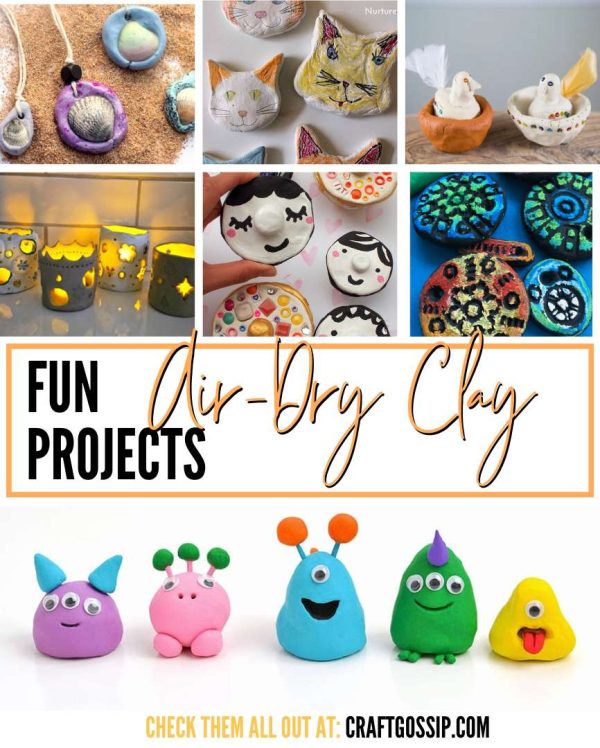
Or you can make these adorable birds with pinch pot nests from Artful Parent. These mosaic pinch pots with lids from Handmade Charlotte are also great.
But there are lots of other fun things kids can do with air dry clay.
These pretty clay vase candle holders form Play Learn Inspire can be made with a printable template to helps kids keep them the same general size. I love the idea of using different things to stamp them as well as different ways to make holes.
Kids can shape clay into their favorite animals to make a craft like these air dry clay cats from NurtureStore. Or they can make their own creatures with this clay monster tutorial from One Little Project.
Make sweet pendants kids can decorate, paint and wear with this tutorial from Kitchen Table Classroom. Or grab some seashells from your last trip to the beach and make seashell pendants with this idea from Moms and Crafters.
Pendants are only a short journey from the classic air dry clay or salt dough Christmas tree ornaments, so you can also just pull out your cookie cutters and let kids decorate simple shapes to decorate the tree. Once you get started with air dry clay I’m sure you’ll come up with lots of ways to use it!

Leave a Reply