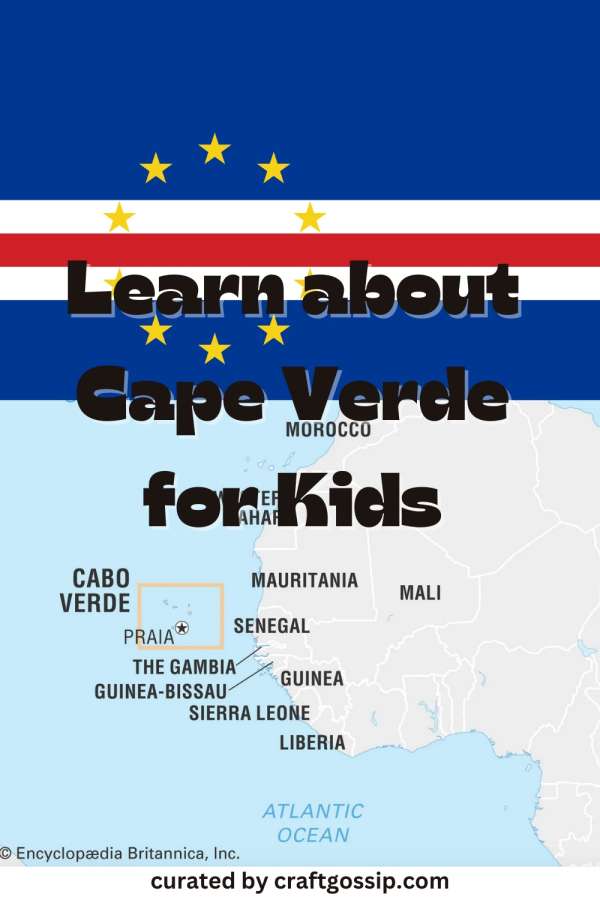
 Cape Verde, also known Cabo Verde and officially the Republic of Cabo Verde, is an archipelago in the Atlantic Ocean off West Africa. Its islands were formed by volcanic activity and have a combined land area of around 1,557 square miles, or 4,033 square kilometers, with a population just under 600,000 people.
Cape Verde Basics
- Cape Verde lies between 320 and 460 nautical miles (600 and 850 nautical kilometers) west of the westernmost point of continental Africa.
- It is part of Macronesia along with the Azores, the Canary Islands, Madeira and the Savage Isles. Cape Verde is made up of 10 islands, nine of which are inhabited.
- It is said that the islands were uninhabited until the 15th century when Portuguese explorers landed there. Portuguese is still the national language, along with Cape Verdean Creole.
- The country is named after Cap-Vert, which is part of Senegal and the westernmost point in Africa. That name came from the Portuguese Capo Verde or green cape.
- The country has been called Cape Verde in English since it gained its independence in 1975, but in 2013 the country’s delegation to the United Nations called on other countries to refer to it as the Republic of Capo Verde. In official documents it is referred to as Capo Verde, even when those documents are in English.
- The capital and largest city is Praia, which is on the largest island, Santiago. It has a president and a prime minister as well as a National Assembly.
- The islands prospered during the Atlantic slave trade and later as a location for resupplying ships headed to the Americas and elsewhere (Charles Darwin stopped there during the voyage of the Beagle.)
- More Cape Verdeans live abroad than live in Cape Verde itself, with the largest population being in the United States.
Cape Verde National Symbols
The Cape Verde flag has a dark blue background with horizontal stripes of white, red and white starting at the middle of the flag. A set of ten five-pointed stars sits toward the lower left corner, representing the main islands of the country.
Blue is for the ocean, while the red and white bars symbolize the road to building the nation, as well as peace and effort.
The Cape Verde national anthem is “Cântico da Liberdade” or “Chant of Liberty,” which was adopted in 1996. The country had shared a national anthem with Guinea Bissau before that, as the countries gained independence at the same time.
According to Symbol Hunt, the national bird is the gray-headed kingfisher (they’re so cute!), while the national animal is the manatee. They say the national flower is the Gerbera daisy, and the Cape Verdean dragon tree is the national tree.
Learn about Cape Verde for Kids
The African manatee is different from the manatees found in other parts of the world, and they haven’t been studied as well, but you can listen to the call of an African manatee and learn more about them here.
There are lots of great learning activities about Cape Verde at Teachers Pay Teachers. You can also find some downloadable worksheets and more facts at Kids Konnect.
Learn more about Pico de Fogo, the highest mountain on Cape Verde and the only active volcano. It last erupted in 2014.
Learn about and listen to morna, a traditional music, movement and poetry practice from Cape Verde that typically includes stringed instruments like the guitar, violin and ukulele.
Explore cachupa, a classic Cape Verdean stew, and try the recipe on that page or this one from Travel and Munchies.




Leave a Reply