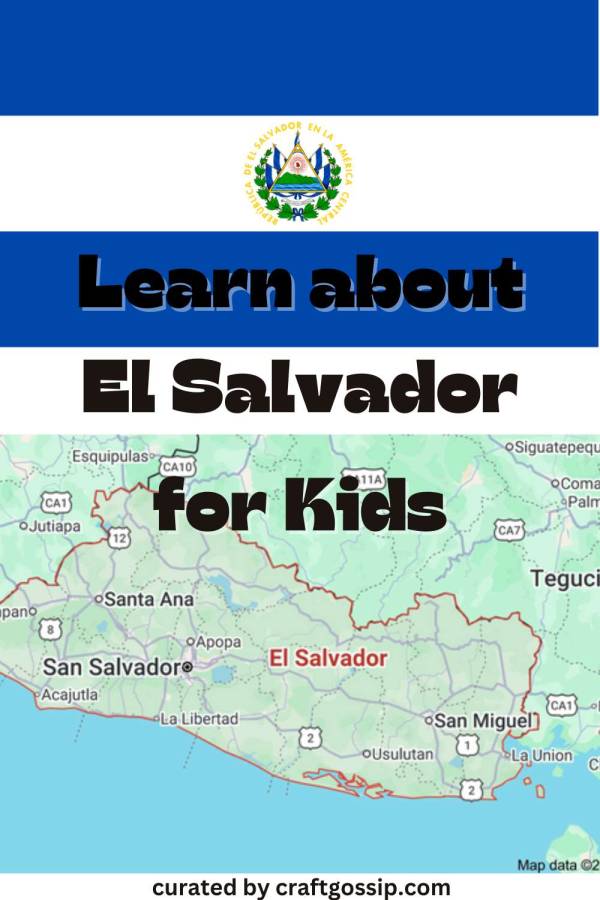
El Salvador, officially the Republic of El Salvador, is a country in Central America bordered by Honduras, Guatemala and the Pacific Ocean. It was historically home to the Maya and then the Cuzcatlecs before being conquered by Spain in the early 16th century.
El Salvador Basics
- Capital and largest city: San Salvador
- Area: 8,124 square miles, or 21,041 square kilometers
- Population: around 6 million
- Official language: Spanish, but the indigenous Nawat language is also recognized
- Demographics: 86 percent of Salvadorans are Mestizo (mixed white and indigenous) and more than 81 percent are Christians, mostly Catholic
- Government: El Salvador is a presidential republic with a president and vice president and national legislature
- Name: El Salvador, meaning “The savior” in Spanish, referring to Jesus, has been the country’s name since 1915 (before that it was known as the Republic of Salvador)
- Independence: El Salvador was part of the Captaincy General of Guatemala (controlled by Spain) until 1821, then was forced into the first Mexican Empire, which it seceded from in 1823 to become part of the Federal Republic of Central America; it became a sovereign state when the Republic dissolved in 1841.
- Money: El Salvador has used US dollars since 2001; the Salvadoran colón is still legal but no longer circulated
El Salvador National Symbols
- Flag: The Bandera Magna (“great flag”) has two blue stripes with a white stripe in the center. The white stripe features the coat of arms. It was inspired by the flag of the Federal Republic of Central America and has been in use since 1916. The blue stripes represent the oceans the border Central America, while the white stripe symbolizes peace.
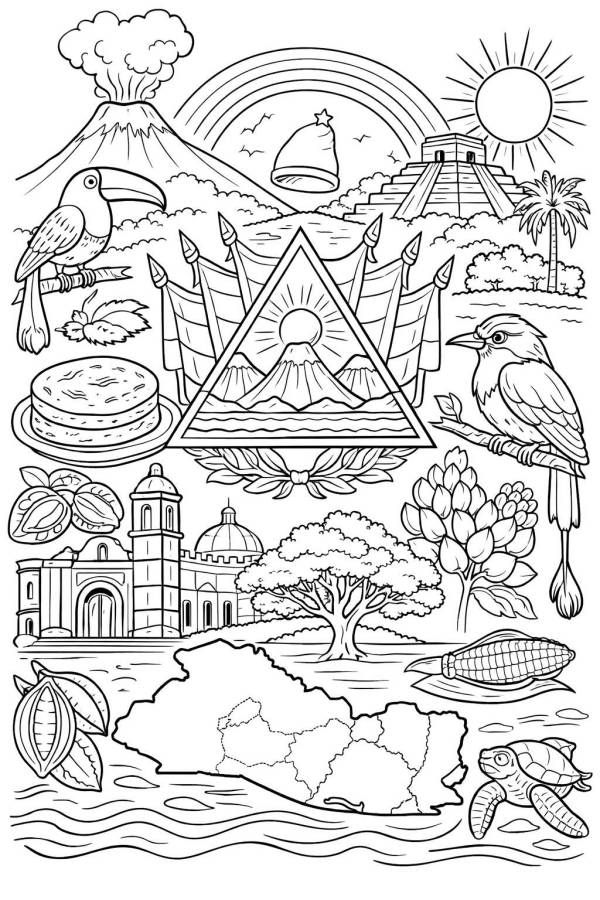
- Coat of arms: The coat of arms has a triangle in the center, representing the three branches of government. Inside the triangle are five green conic volcanoes, which symbolize the original members of the United Provinces of Central America, as well as the rain forest. Inside the triangle is a Phrygian cap (a symbol of liberty), beams of light and a red sky sunrise., as well as a rainbow arch. Outside the triangle are five blue and white flags for the Federal Republic of Central America, which are held by indigenous war spears. There’s also a laurel wreath, the date of independence and the national motto, with the official name of the country in Spanish surrounding it all.
- Motto: God, Union, Liberty
- National anthem: “Himno Nacional de El Salvador,” it was adopted in 1879 and officially approved in 1953. (It sounds a lot like the “William Tell Overture” at the beginning, which is kind of fun)
- National tree: maquilishuat, also known as pink poui or rosy trumpet tree
- National bird: turquoise-browed motmot, known in El Salvador as torogoz
- National flower: the flower of the Yucca gigantea, a large, evergreen shrub; the flower is known as izote and in El Salvador they are cooked with eggs
El Salvador Learning Activities
Check out Santa Ana volcano, a stunning hike through a very cool landscape that ends with the emerald colored crater lake in the active volcano.
Learn more about the sights in San Salvador with this article from National Geographic.
Learn about Fernando Llort, known as El Salvador’s National Artist, and make art in his style with this activity from Discovering Español.
The coloring pages from Kids Activities Blog also include facts about El Salvador, and you can read more facts about El Salvador or download printable fact cards from Frosting and Glue.
Srta Spanish has a good list of resources for teaching about El Salvador if you need more. And of course you can find tons of resources in English and Spanish at Teachers Pay Teachers.
I don’t think El Salvador has an official national dish, but probably the most popular dish from El Salvador is pupusas. These little corn cakes can be filled with beans and cheese, chicken, pork or whatever else you like. Chili Pepper Madness has a good looking recipe.


Leave a Reply