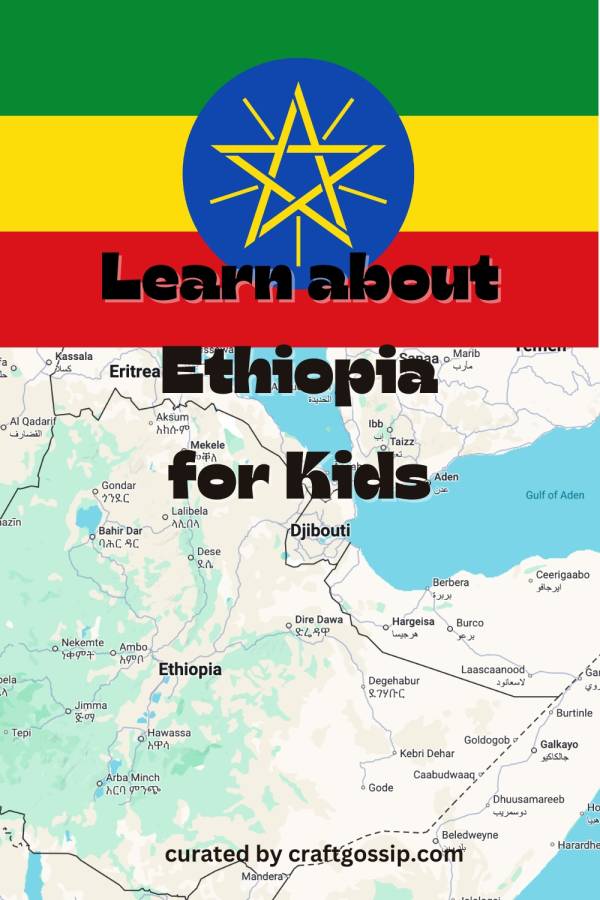
Ethiopia is a landlocked country in the Horn of Africa that’s officially known as the Federal Democratic Republic of Ethiopia. Let’s learn more about this diverse country.
Ethiopia Basics
Ethiopia is the place where anatomically modern human life began. It is bordered by Eritrea, Djibouti, Somalia, Kenya, Sudan and South Sudan.
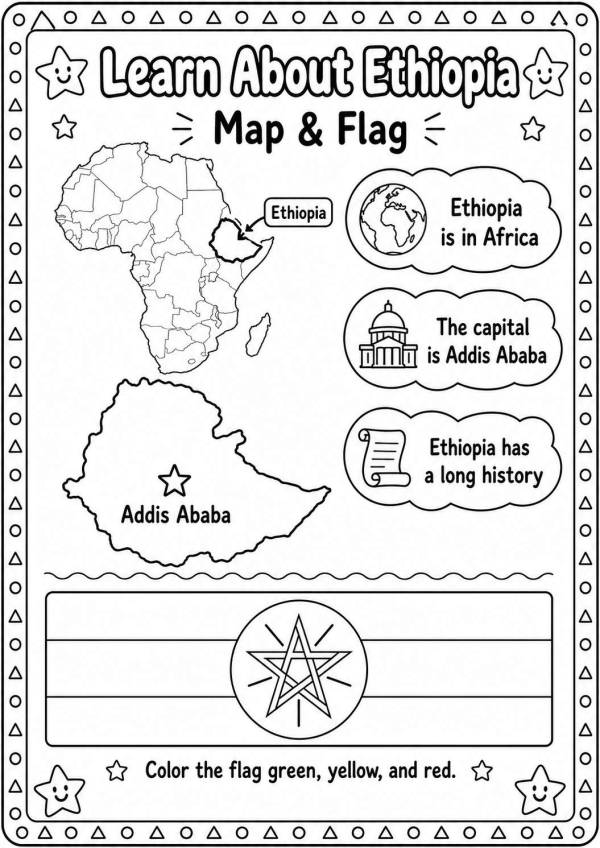
The country is 426,400 square miles, or 1,104,300 square kilometers, and is home to about 135 million people. Its capital and largest city is Addis Ababa.
The land that is modern day Ethiopia has been a part of many dynasties and kingdoms over its long history, including 900 years as part of the kingdom of Aksum, and the establishment of the Ethiopian Empire in 1270. It was annexed by Italy in 1936 and occupied by the British Army during World War II, but regained its sovereignty in 1944.
Haile Selassie was the emperor of Ethiopia from 1930 to 1974, when a Soviet-backed military junta took over and ruled for 17 years during civil war. Today the country is a parliamentary republic with an authoritarian government that includes a president, prime minister and parliament.
There are more than 80 ethnic groups living in Ethiopia, with the main groups being Oromo and Amhara. A majority of Ethiopians identify as Christian.
The name Ethiopia is said to come from the name of the first king, Ethiopis.
The official languages are Afar, Amharic, Oromo, Somali and Tigrinya, but there are said to be at least 90 languages spoken in the country. The most common are Oromo and Amharic.
Ethiopia National Symbols
The Ethiopian flag features equal horizontal stripes in green, yellow and red, which have been used on flags in the region since 1897. The flag also has a blue circle in the center with a yellow five pointed star with five rays behind it, said to represent Ethiopia’s bright future and the equality of all.
The national anthem is known in English as “March Forward, Dear Mother Ethiopia” or “Honour of Citizenship.” It was adopted in 1992.
The lion passant (a walking lion with usually its front right paw raised and curled) has been a symbol of Ethiopian leadership since the 1800s. Ethiopian rulers have also used the title Lion of Judah through history.
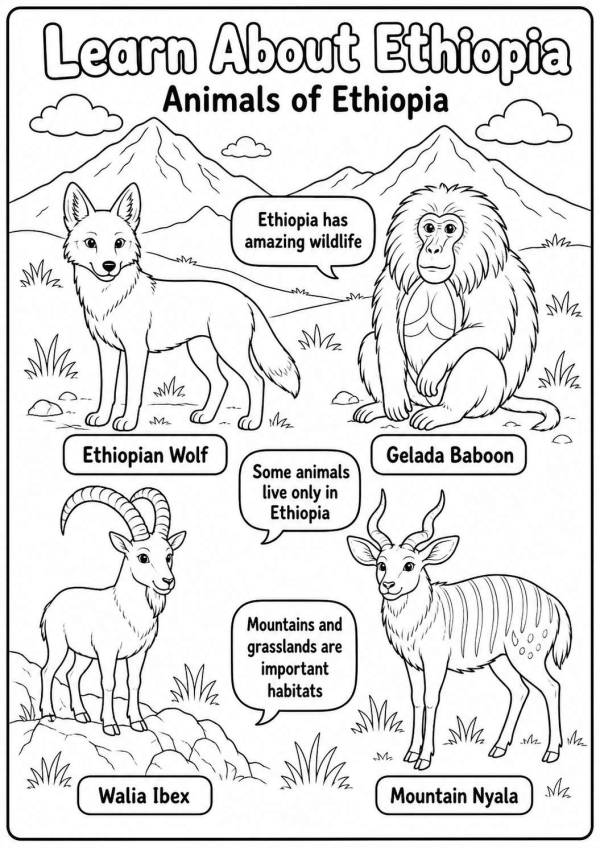
There’s not much information I could find about official national symbols, but important animals in the country include the African bush elephant and the saker falcon.
Ethiopia Learning Activities for Kids
Learn the difference between bush elephants and forest elephants with this video from Wild Facts.
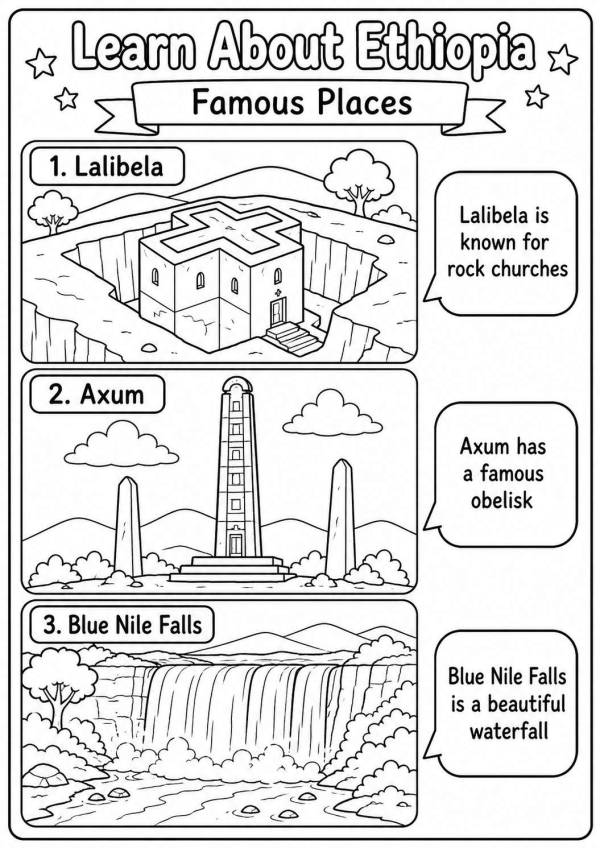
Learn about the Abay River, also known in other countries as the Blue Nile, which begins at Lake Tana in Ethiopia and supplies about 85 percent of the water that eventually flows to the Nile in the rainy season. And check out the Grand Ethiopian Renaissance Dam, the largest dam in Africa.
Check out the rock-hewn churches of Lalibela, 11 cave churches from the 13th century that are a UNESCO World Heritage Site. Watch this story from 60 Minutes about them.
Read about the Addis Mercato in Addis Ababa, the largest open air market in Africa. (Here’s another photo essay to explore.)
And don’t miss Fasil Ghebbi, a castle complex used by generations of Ethiopian royalty.
Older kids can learn more about Haile Selassie, who was considered to be a reincarnation of god by the Rastafari.
Local Passport Family has a great collection of ideas for learning about Ethiopia including books, crafts and videos (some of the videos aren’t live anymore, but you can search for the topics and maybe find more).
Check out books about Ethiopia with this list from Teach Beside Me. Find worksheets and fact sheets at Kids Konnect.
Grab more resources about Ethiopia for kids from Teachers Pay Teachers.
Doro wat, a spicy chicken stew, is considered the national dish of Ethiopia. Give it a try with this recipe from the Daring Gourmet.




Leave a Reply