
8 fun learning activities to go with everyone’s favorite book – Little Blue Truck!
These activities feature trucks, mud, and farm animals – what else do you need?
Check out the full activity round up here at Sunnydayfamily.com.
Ideas and resources
8 fun learning activities to go with everyone’s favorite book – Little Blue Truck!
These activities feature trucks, mud, and farm animals – what else do you need?
Check out the full activity round up here at Sunnydayfamily.com.
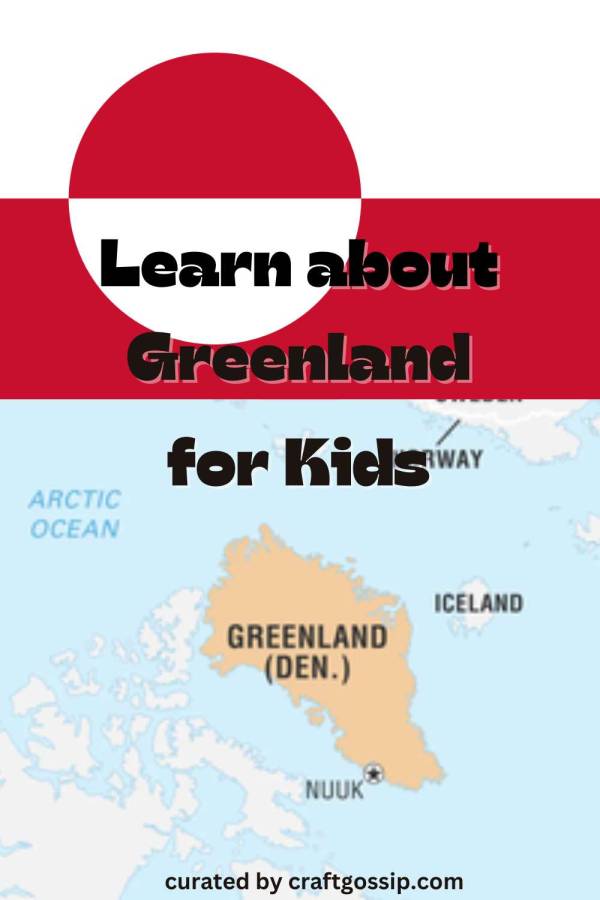 Greenland is technically an autonomous territory of the Kingdom of Denmark rather than its own country, but it’s also the world’s largest island, so that seems worth celebrating. Let’s take a closer look at Greenland!
Greenland sits between the Arctic and Atlantic oceans, and its Hans Island has a .75 mile or 1.2 km long land connection to Canada. It has an area of 836,330 square miles, or 2,166,086 square kilometers, with a population less than 57,000.
The capital and largest city is Nuk, where more than 20,000 people live.
Citizens of Greenland and citizens of Denmark, and thus part of the European Union. There are two representatives from Greenland in the parliament of Denmark. Greenland also has its own premier and legislature, and is considered a self-governing entity within the constitutional monarchy of Denmark (the king has a mostly ceremonial role).
Most people in Greenland are Greenlandic Innuit, and the official language is Greenlandic, though Danish and English are also recognized.
The first Paleo-Innuits settled in Greenland around 2500 BCE, while the Norse arrived in 986. Greenland had a union with Norway in the 1200s and it unified with Denmark in 1814. Home rule was established in 1979 and the island became more independent in 2009.
The Norse named it Greenland for marketing purposes; in Greenlandic its called Kalaallit Nunaat, or land of the Kalaallit, being the name of the indigenous people who live on the western part of the island.
Kaffeklubben Island is considered the northernmost permanent land on Earth.
Greenland’s economy is dependent on fishing and one third of public revenue comes in the form of financial aid from Denmark.
Eighty percent of Greenland’s electricity is produced by hydropower. There are few roads between towns because of the fjords that would require ferries to connect them.
The flag of Greenland is made up of two horizontal bands of color, one white and one red, with a circle that’s left of center and in which the colors are opposite from the stripe they sit in. The flag was adopted in 1985.
It’s not a country but it does have an anthem, known in Greenlandic as “Nunarput utoqqarsuanngoravit” and in English as “Our Ancient Land.” It was written in 1912 and adopted in 1916. It was originally set to the melody of the Swedish national anthem, but the music was updated in 1937.
The coat of arms is a blue shield with a polar bear standing on two legs and facing the left, with its tongue sticking out. It has been part of the coat of arms of Denmark since 1666 and still exists in the coat of arms of the Danish royal family. The current version of the coat of arms was designed and adopted in 1989.
Because its not its own country it doesn’t really have national symbols, but you could argue the polar bear is one, even without it being on the coat of arms.
See more of what it’s like in Greenland with this video from Counting Countries (warning someone throws up in the video because she swallowed a bug; if you want to skip the first 30 seconds or so and then again at minute 16 you should be good) or check out Nuuk in this video from Travel Obscurer.
The Awkward Traveler has a great post answering questions about Greenland by native Greenlanders. Learn about what they call themselves, the major regions of the country, what it’s like to grow up there and how people travel in the country.
Learn more about Greenland for kids with this post and video from Let’s Go Geography.
Print a maze using the shape of Greenland from Muse Printables. Learn more about why it’s called Greenland from Routes North.
Check out the popular foods of Greenland at Secret Atlas. It says that Suaasat is the national dish, which is a stew made with different kinds of meat such as seal or reindeer. You can make it with beef, and there’s a recipe at Culinary Adventures with Camilla you can try.
Also check out our post about Leif Eriksson Day, and more Greenland resources at Teachers Pay Teachers.
Leave a Reply